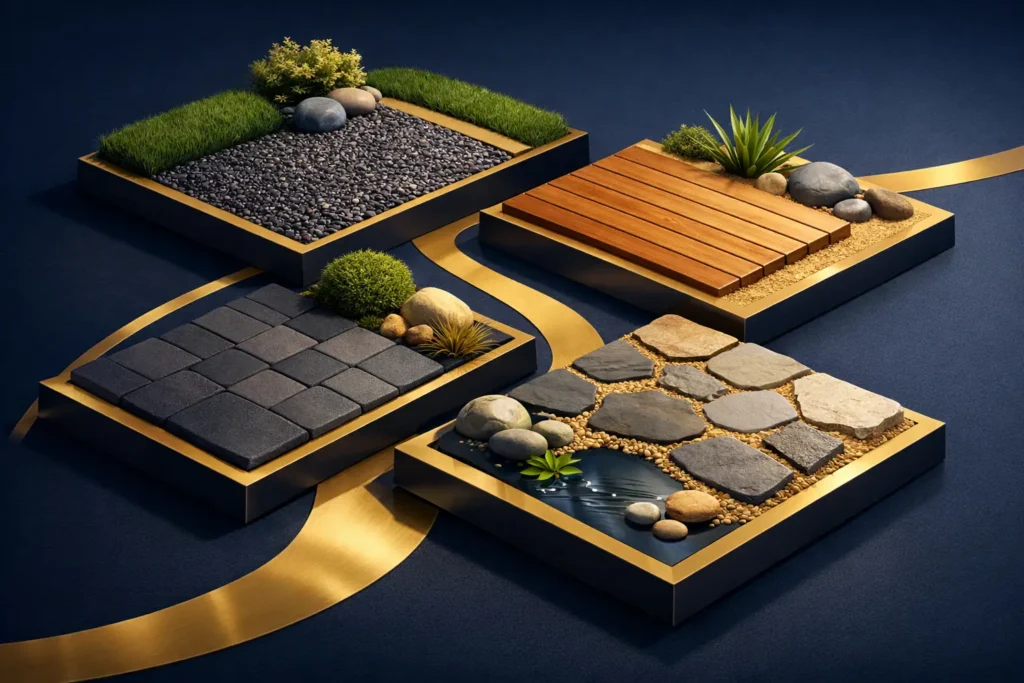
Best Materials for Garden Paths Compared
A garden path does more than get you from the back door to the shed. It sets the tone for the whole outside space, affects drainage, and decides whether the garden feels smart and easy to maintain or constantly in need of attention. When people ask about the best materials for garden paths, the right answer usually comes down to three things – appearance, durability, and how much ongoing maintenance you are willing to accept.
In Scotland, that choice matters even more. A path has to cope with wet weather, shaded areas, leaf fall, muddy shoes, and the day-to-day use that comes with family homes. Some materials look lovely for a season and then start shifting, staining, or growing weeds. Others cost more upfront but stay attractive and practical for years.
How to choose the best materials for garden paths
A good path material should suit both the property and the way the garden is used. A front garden path has a different job from a route around the side of the house or a patio connection in the back garden. If the path is a main access route, slip resistance, evenness underfoot, and low maintenance become far more important than they might be for a decorative stepping path.
Drainage is another big factor. Surfaces that trap water can leave puddles, encourage moss, and create extra wear over time. Permeable options tend to perform better in British gardens because they allow water to pass through rather than forcing it to sit on the surface.
Appearance should never be treated as an afterthought, but it should not be the only deciding factor either. The most successful paths are the ones that still look good after repeated use, not just on the day they are laid.
Gravel
Gravel is often one of the first materials homeowners consider because it has a traditional look and can suit both country-style and modern gardens. It is relatively quick to install and works well in informal spaces where a softer finish is wanted.
The downside is movement. Gravel rarely stays exactly where you want it, especially on busy paths or areas with children, bins, or bikes passing over it. It can spread into borders, migrate onto patios, and need regular raking to keep it tidy. Weed growth can also become an issue if the base preparation is poor.
Underfoot, gravel is not ideal for everyone. Pushchairs, wheelie bins, and anyone wanting a smooth walking surface may find it frustrating. So while gravel can be one of the best materials for garden paths in the right setting, it is usually better for lower-traffic areas than for a main route you use every day.
Natural stone
Natural stone has real visual appeal. It gives a premium finish and works especially well with period properties, landscaped gardens, and patios where the path needs to feel like part of a wider design. Each slab has its own character, so the overall result tends to look established rather than manufactured.
It is also a strong long-term option when properly specified and laid. Stone can cope well with weather and foot traffic, and it ages better than many cheaper alternatives. That said, not every stone surface behaves the same way in wet conditions. Some finishes can become slippery, while lighter tones may show staining more readily in shaded or heavily planted areas.
Maintenance is usually manageable, but joints can attract weeds and movement can appear over time if the base is not done properly. Natural stone is often chosen for its appearance first, which is fair enough, but it still needs the right groundwork to deliver lasting value.
Concrete slabs and pavers
Concrete paving is popular because it offers a wide range of sizes, colours, and finishes. It can imitate stone reasonably well, creates a neat and structured look, and is often used where homeowners want a practical path that matches a driveway or patio.
The main advantage is consistency. Concrete slabs and block-style pavers give a uniform finish and can work in both traditional and contemporary settings. They are generally easier to walk on than gravel and can be a sensible choice for straight, well-defined routes.
The trade-off is that some installations can look dated quite quickly, particularly if cheaper products are chosen. Over time, joints may allow weed growth, and individual units can shift or sink if the sub-base is not strong enough. In wetter gardens, staining and moss can also become a recurring maintenance task.
Brick
Brick paths have a classic look that suits older homes particularly well. They can bring warmth and character to a garden and are often chosen where homeowners want something with a more traditional feel than standard paving.
They do, however, come with a few practical drawbacks. Brick can weather attractively, but it can also become uneven over time, and the joints need attention if you want the path to stay sharp and tidy. In damp or shaded areas, algae and moss can become a problem, which affects both appearance and grip.
Brick is usually more about style than low maintenance. If the goal is charm and character, it remains a strong contender. If the goal is a clean, contemporary finish with minimal upkeep, there are usually better options.
Stepping stones
Stepping stones work well in informal gardens, especially through lawns, gravel beds, or planted spaces. They can break up the landscape nicely and create a softer, less engineered feel.
They are not, however, a full-surface path in the usual sense. In wet weather, the surrounding ground can become muddy, and they are less practical for carrying garden equipment, wheeling bins, or creating a reliable everyday walkway. They also tend to suit decorative routes rather than access paths where safety and convenience matter most.
For homeowners after a feature, stepping stones can be attractive. For homeowners after a dependable, all-weather route, they are often too limited.
Why resin bound stands out
For many modern homes and upgraded outdoor spaces, resin bound surfacing is one of the best materials for garden paths because it combines appearance with practical performance. It delivers a smooth, attractive finish without the loose movement of gravel or the weed-prone joints of many paved surfaces.
A well-installed resin bound path is permeable, which means water drains through the surface rather than pooling on top. That is a major advantage in gardens where puddles, runoff, or damp corners are a recurring issue. It also helps keep the surface cleaner and more usable throughout the year.
From a design point of view, resin bound offers flexibility. Different aggregate blends can create anything from a soft natural look to a sharper contemporary finish, making it easier to match the path to the house, driveway, or patio. The result feels premium without being fussy.
There is also the day-to-day benefit. Resin bound paths are easy underfoot, suitable for regular use, and much lower maintenance than loose or heavily jointed materials. You do not get stones scattering across the garden, and you are less likely to spend weekends dealing with constant weed growth.
That does not mean resin bound is the right choice in every single case. The quality of the base matters, as does proper installation. A survey-led specification is important because the best result depends on whether the project needs a permeable tarmac base, another suitable base system, or an overlay approach. When that is done properly, the finish is durable, attractive, and planning-friendly for many residential settings.
Which material is right for your garden?
If your priority is a relaxed, informal look and you do not mind regular upkeep, gravel may suit. If you want a premium traditional finish and are happy to invest in both materials and installation, natural stone is a strong option. If budget and structure matter most, concrete paving can do a solid job.
But if you want a path that looks smart, drains well, feels good to walk on, and stays low-maintenance over time, resin bound surfacing is often the better long-term choice. That is particularly true for front paths, side access routes, and garden spaces that need to cope with regular use in British weather.
For homeowners across Scotland looking to improve kerb appeal and practicality at the same time, this balance matters. A garden path should not just look good from the kitchen window. It should perform properly in January, stay tidy through autumn, and still add value to the overall appearance of the property years down the line.
The best path material is the one that fits the way you actually live. Choose with the weather, the maintenance, and the full garden in mind, and the finished result will feel like a genuine upgrade rather than another job waiting to be redone.