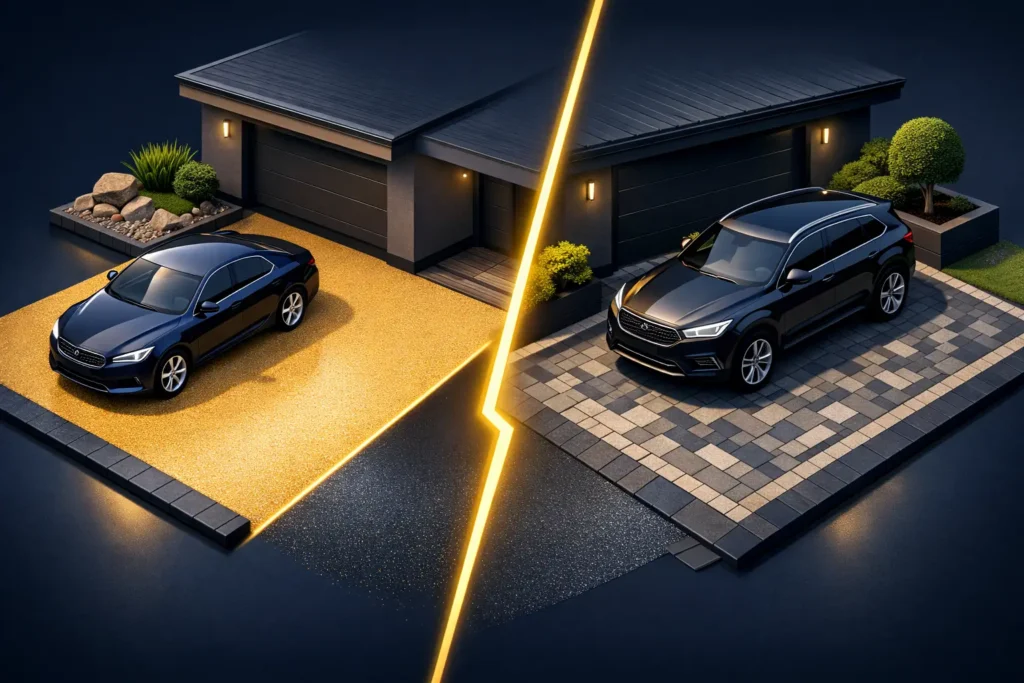
Resin Driveway vs Block Paving: Which Wins?
A driveway has a habit of showing every weak decision. A surface that looked tidy on day one can start holding puddles, growing weeds or sinking at the edges far sooner than most homeowners expect. That is why resin driveway vs block paving is not just a style choice – it is really a question of upkeep, drainage, durability and how much time you want to spend dealing with it later.
For many homes, both options can work well when they are properly specified and installed. But they do not behave in the same way over the years. If you are weighing up a new driveway, especially in Scotland where heavy rain and changing temperatures put surfaces to the test, the better choice usually comes down to what matters most to you after the installation is complete.
Resin driveway vs block paving at a glance
Block paving has been a familiar choice for years. It gives a traditional, structured look, with individual blocks laid in patterns that suit a wide range of properties. It can look smart and substantial, particularly on period homes or where a more classic finish is wanted.
Resin bound surfacing offers a cleaner, more contemporary appearance. The stone is mixed with resin and laid as a smooth, permeable finish, creating a surface that feels modern without looking stark. It works particularly well for homeowners who want a premium finish that lifts kerb appeal without making the front of the property look overly busy.
If you are comparing the two on first impressions alone, it often comes down to taste. If you are comparing them on practical day-to-day performance, resin bound tends to offer more convenience and fewer recurring maintenance issues.
Appearance and kerb appeal
Block paving gives you clear lines, visible joints and a more segmented finish. Some homeowners like that definition. It can suit older properties, larger driveways and homes where you want the driveway to look more architectural.
Resin bound gives a more uniform finish, with natural aggregate colours that feel softer and more refined. Because there are no individual blocks or obvious joints across the main surface, the overall effect is neater and often more premium. That matters if you are updating the outside of your home as part of a wider improvement project.
There is also a difference in how each surface ages visually. Block paving can start to look untidy if joints open up, weeds appear or some blocks shift out of line. Resin bound usually keeps its appearance more consistently, provided the base is right and the installation is carried out by an approved contractor.
Drainage matters more than most people think
This is one of the biggest dividing lines in the resin driveway vs block paving discussion.
A resin bound driveway is fully permeable when installed on the correct base. Water drains through the surface rather than sitting on top, which helps reduce standing water and supports SuDS-compliant surfacing for many residential settings. For homeowners, that usually means a more practical driveway in wet weather and fewer concerns about surface water building up.
Block paving can also allow some drainage, but it depends heavily on the system, sub-base and jointing. Traditional block paving is not always fully permeable in the same way, and performance can vary more over time as joints compact, clog or deteriorate.
In a climate where rainfall is a regular part of life, a permeable surface is not a small advantage. It can make the driveway safer underfoot, cleaner to use and less likely to suffer from long-term drainage-related issues.
Maintenance and day-to-day upkeep
This is often where homeowners start leaning firmly one way or the other.
Block paving usually asks more of you over time. The joints between blocks can attract moss, weeds and general debris. Sanding may need topped up. Individual blocks can loosen or move, particularly in areas that take repeated vehicle turning or braking. None of that means block paving is a poor surface, but it does mean maintenance is part of the package.
Resin bound is generally lower maintenance. Because the finish is smooth and there are no open joints across the surface, there is less opportunity for weed growth and less debris to settle in the same way. Routine care is straightforward, and the driveway tends to stay presentable with less effort.
That makes resin particularly appealing for busy households, rental properties, second homes or anyone who wants the driveway to look good without regular attention.
Durability and how each surface wears
A good driveway is only as strong as the specification beneath it. That applies to both surfaces.
Block paving can be durable, but because it is made up of individual units, movement in the base or repeated pressure can show up as dips, lifted edges or uneven areas. Repairs are possible, which some homeowners see as a plus, but the fact that repairs are common is also worth noting.
Resin bound, when installed over a suitable base such as permeable tarmac or another properly prepared substrate, provides a strong and stable surface that copes well with everyday vehicle use. It does not have the same pattern of joint-related movement, and that often translates into a tidier finish for longer.
The key phrase here is properly specified. A resin driveway is not a product to cut corners on. The quality of the base, the preparation and the installation standard all affect how well it performs. That is why survey-led specification matters. A reputable installer should assess the existing ground conditions and recommend the right system rather than applying a one-size-fits-all approach.
Repairs and long-term practicality
One argument often made in favour of block paving is that individual blocks can be lifted and replaced. That is true, and in some situations it is useful. If a small area is damaged, localised repairs can be relatively simple.
Resin bound repairs are possible too, but they need to be handled carefully to maintain a consistent finish. Because the surface is continuous, patch repairs may be more noticeable than replacing a few blocks. For some homeowners that is a consideration, especially on driveways with a high risk of future ground movement.
That said, the need for repair should not be looked at in isolation. A surface that is easier to patch but more likely to move or attract weed growth is not automatically the better long-term choice.
Which is better for Scottish homes?
For many properties across Scotland, resin bound has a practical edge because it combines drainage, appearance and lower maintenance in one system. Wet weather puts pressure on any external surface, and a permeable, easy-to-clean driveway has clear advantages.
It also suits the way many homeowners now approach property improvements. People want materials that are durable, attractive and straightforward to live with. They want the front of the house to feel looked after, but they do not want a driveway that becomes another maintenance job every season.
Block paving still has its place. It can be the right fit for certain property styles or where a traditional look is the priority above everything else. It may also appeal to homeowners who prefer the visual structure of individual blocks and are comfortable with more regular upkeep.
But if your priorities are a premium finish, strong drainage performance and less maintenance, resin bound will usually come out ahead.
When resin driveway vs block paving depends on the property
There are cases where the answer is not automatic.
If the property has a very traditional character, or the surrounding hard landscaping already uses block features extensively, block paving may feel more in keeping visually. If the existing base condition is poor, the right decision may depend on what groundwork is needed before any final surface goes down.
Likewise, if you are upgrading not just the driveway but also paths or a patio, resin bound can create a more cohesive finish across the full exterior. That continuity is hard to achieve with some block paving schemes, especially where different levels and shapes are involved.
For homeowners who want a joined-up result rather than a patchwork of materials, resin often offers more design flexibility without adding visual clutter.
The smarter question is not just which is cheaper
A driveway should be judged on value, not just initial outlay. The real question is what you are likely to spend in time, upkeep and appearance over the years that follow.
A surface that needs more frequent attention, is more prone to visible movement or loses its neat appearance faster can end up feeling like a compromise even if it seemed attractive at the start. By contrast, a resin bound driveway can justify itself through cleaner looks, easier maintenance and dependable performance in wet conditions.
For that reason, many quality-conscious homeowners now see resin as the stronger all-round option. It gives the premium finish people want, with practical benefits that matter every week, not just on installation day.
If you are deciding between the two, it helps to look past the brochure photos and think about how you want the driveway to perform in real life. The best surface is the one that still feels like the right choice after the first winter, not just the one that looked good on a sample board.